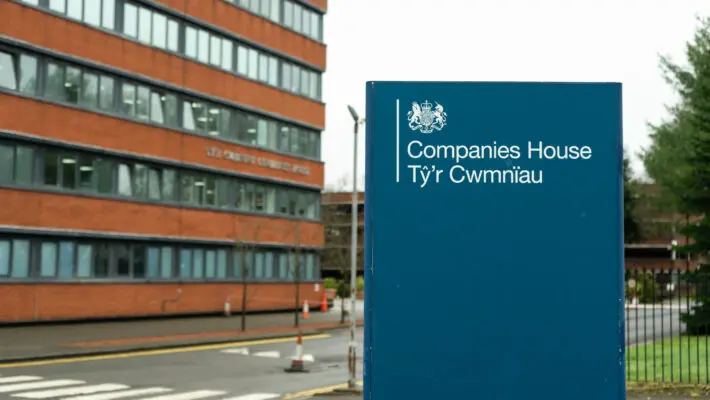
Forty-five minutes later you have uploaded a passport, a driving licence, a recent utility bill and a selfie that looks suspiciously like a hostage proof-of-life, only to be told, at the end of it, that the system “could not match” your face to your photograph and to “try again later”.
Try again later! This is not the DVLA renewing a moped licence. This is the central registry of the world’s fifth-largest economy.
I have lost count of the SMEs I know that are now several months behind on perfectly innocuous filings simply because some founder, usually one with two passports, a name with a hyphen or an unfortunate haircut in 2014, cannot get past the verification gate. The Treasury and the Department for Business will tell you that this is the price we pay for a cleaner register, and that the previous regime allowed shell companies to be set up by anyone with a laptop and a sense of humour. They are right about that. They are wrong about almost everything they have done in response.
Identity verification at Companies House should have been the opposite of what we have got. It should have been near-frictionless for the 99 per cent of directors whose passport, address and bank account already exist as a matched set somewhere in HMRC’s files, and forensic for the 1 per cent who present anomalies. Instead we got the photocopier-shop equivalent of a Soviet checkpoint, designed by a committee that has clearly never tried to use it on a phone in poor light with a teething toddler on its lap.
I am not, I should say, soft on company fraud. The phoenixing brigade, limited company, limited liability, limited shame, have done genuine damage to British creditors for decades, and the appearance of registered addresses at the back of a fried-chicken shop in Croydon was overdue for a tidy. But the fraudsters know what they are doing. They have hired the agents. They have the documents. They are not the ones quietly going non-compliant in Cheltenham because Mum’s passport doesn’t scan in evening light.
The wider issue is that Companies House has become symptomatic. Every time the UK state encounters a problem of trust, its instinct is now to push the cost of solving it down to the smallest economic units in the country. HMRC does this with Making Tax Digital. The Home Office does it with right-to-work checks. The pension regulator does it with auto-enrolment. The collective effect, on a small business, is that you spend an ever larger slice of your week being a junior compliance officer for somebody else’s policy ambitions.
And the cost is not trivial. Our own back-of-the-envelope estimate at Trends Research is that the average UK SME now spends 14 hours a week, fourteen, on regulatory administration that produces no output, no customer satisfaction, no employee training. A team of ten loses a person and a half. That is, mathematically, why productivity in this country has flat-lined.
What would I do? First, build a proper digital identity rail in this country, so that the same verification works for HMRC, Companies House, the DVLA and your bank. The Estonians did this in 2002. Second, presume innocence: most directors are who they say they are, and the system should treat them that way until something looks off. Third, give Companies House actual investigatory powers, and the staff to use them, to chase the genuine fraudsters, rather than penalising the easy targets who are already on the register.
I would also, while I am at it, suggest that the people who design these processes be required to use them. Spend a Saturday morning trying to verify your own identity on a six-year-old Android while supervising a teenager’s GCSE coursework. You will, I promise, redesign the form by Sunday lunchtime.
Until then, my own confirmation statement sits unsigned, my finance director is locked out of his own filings, and the country goes on talking about a productivity puzzle that is not, in fact, very puzzling at all.

Richard Alvin
Richard Alvin is a serial entrepreneur, a former advisor to the UK Government about small business and an Honorary Teaching Fellow on Business at Lancaster University. A winner of the London Chamber of Commerce Business Person of the year and Freeman of the City of London for his services to business and charity. Richard is also Group MD of Capital Business Media and SME business research company Trends Research, regarded as one of the UK's leading experts in the SME sector and an active angel investor and advisor to new start companies. Richard is also the host of Save Our Business the U.S. based business advice television show. Richard is also the founder of the CBM Foundation, Capital Business Media's charitable foundation, which gives 1% of the group's time, product and profit to charity every year.