
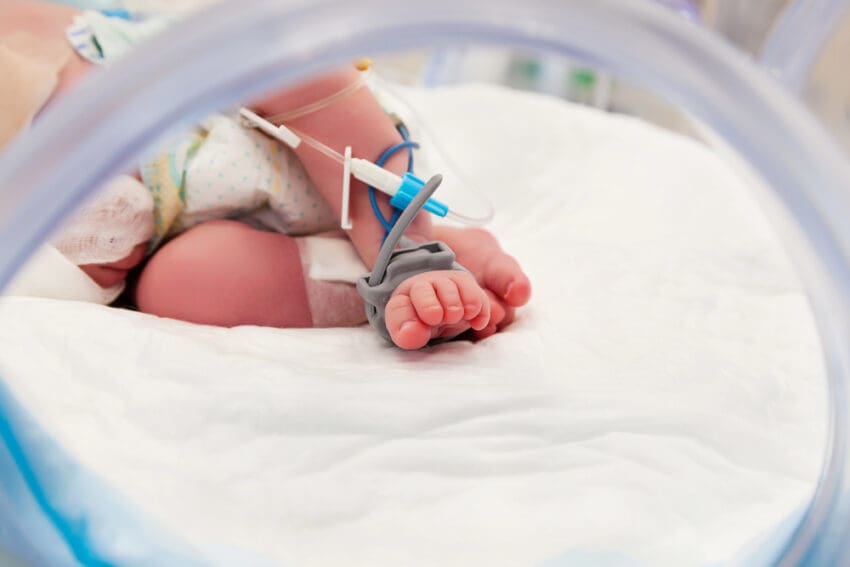
Businesses must prepare for a significant new workplace entitlement where a baby is born on or after 6 April 2025 – neonatal care leave. Currently, 1 in 7 babies in the UK requires neonatal care due to premature birth, low birth weight, or complications.
Until now, parents in this situation have had to rely on maternity, paternity, or unpaid leave, often adding financial strain to an already stressful time.
The new law changes this, giving employees a day-one right to take up to 12 weeks of neonatal care leave if their baby is admitted to hospital for at least seven consecutive days in their first month of life. Some employees will also qualify for statutory neonatal care pay (SNCP), which businesses will be responsible for administering.
This change requires businesses to review their policies and processes. With around 60,000 parents expected to benefit from the new right, employers should act now to ensure they are ready for the its legal and practical implications.
So, what do businesses need to know—and how can they prepare?
What is neonatal care leave, and who is eligible for it?
It is a day-one right for employees to take neonatal care leave where a neonate, (a baby who is 28 days old or less) is admitted to hospital for care for seven continuous days or more. This right applies to each parent separately. Neonatal care is:
- Medical care received in a hospital.
- Medical care under the direction of a consultant after the child leaves hospital which includes ongoing monitoring and visits from healthcare professionals arranged by the hospital.
- Palliative or end-of-life care.
The right is in addition to maternity, adoption, paternity and shared parental leave.
Statutory neonatal care pay (SNCP) may be payable if the employee has at least 26 weeks of continuous service and earns an average of at least £123 a week. SNCP will be £187.18 a week.
“Parent” has a wide meaning and includes the child’s parent, prospective adopter or intended parent (as in a surrogacy arrangement). It also includes the partner of the child’s mother or prospective adopter where they are living together in “an enduring family relationship”.
Parents can take up to 12 weeks of neonatal care leave (which may be paid) with a minimum entitlement of one week. It is provided from the day the newborn is admitted to a neonatal unit. It can be taken at any point during the first 68 weeks following the baby’s birth or adoption placement. A parent is already likely to be on family leave, such as maternity leave, when neonatal care leave is needed, and the new right effectively means that a period of neonatal care leave is added to the end of maternity leave.
There are two different periods of neonatal care leave. The Tier 1 period begins on the day the child starts receiving neonatal care and ends seven days after the day neonatal care ends. Neonatal care leave can be taken in non-continuous blocks of at least one week during Tier 1. The remainder of the 68 weeks is called the Tier 2 period, and neonatal care leave must be taken in one continuous block.
The notice varies depending on whether it is Tier 1 or Tier 2 (with reduced notice for Tier 1), but the employer and employee can mutually agree to waive the notice requirements.
What should employers do now?
Employers need to prepare for the introduction of neonatal care leave, both in terms of policy implementation and internal processes and will need to:
- Prepare a neonatal care leave policy that includes details of who is eligible, when the right applies, and notice requirements.
- Decide whether or not to enhance the statutory right, for example, by paying more than SNCP for a specified period. Businesses already providing enhanced contractual family rights may be prepared to do this.
- Review and update any existing neonatal care leave policy to meet the minimum statutory entitlements.
- Inform employees about the new policy (or any updates to an existing policy) and ensure that employees understand the process for taking neonatal care leave.
- Train managers in dealing with neonatal care leave applications and supporting the employee at a stressful time.
- Be aware that, as with other types of family leave, employees will continue to benefit from their terms and conditions of employment except for pay. There will also be protection from detriment and unfair dismissal.
- Look out for the detailed Government guidance, which is still to be published.
Finally, even after neonatal care has ended, the child may need ongoing medical treatment which will be another stressful time for the parent. Employers should consider whether more flexible working patterns would be helpful and should publicise any well-being initiatives and EAPs.
Below are details of charities which support families with newborns receiving neonatal care.
The Smallest Things Charity: The Smallest Things
Bliss Charity: Bliss
Working Families: Working Families