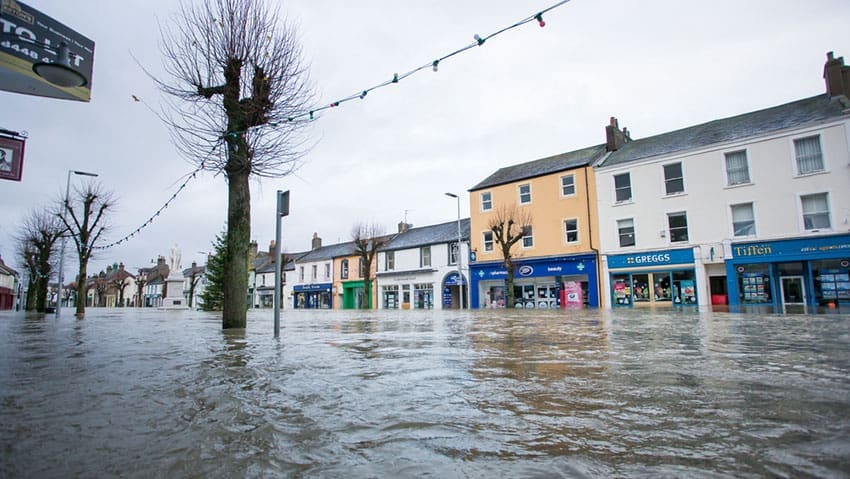
A commercial site near water can look like a bargain until the first storm. Flooding does not just damage a building. It halts trade, voids leases, and can turn a promising development into a liability that lenders refuse to touch.
For developers and business owners, flood risk is a board-level question, not a technical afterthought. A specialist assessment from Rida Reports puts a number on that risk and sets out how to manage it. Getting that clarity before you commit capital is one of the cheaper forms of insurance a project can buy.
Why Does Flood Risk Belong On the Boardroom Agenda?
Flooding is now a mainstream commercial risk in the UK. Wetter winters and heavier downpours have pushed more sites into the at-risk category.
The cost lands in several places at once. There is the physical damage to fabric and stock. There is the lost trade while a site is closed. And there is the longer tail of higher insurance and a weaker resale position. A single flood can erase a year of margin.
Boards are also waking up to disclosure. Investors and large customers increasingly ask how a company manages physical climate risk. A documented flood assessment answers that question with evidence rather than hope. It signals that the business has done its homework.
Climate pressure is part of the wider picture. The same extreme weather that drove a spike in retail demand during a recent heatwave also brings the storms that flood commercial premises. Volatility cuts both ways for business.
What Does a Flood Risk Assessment Cover for Developers?
A flood risk assessment, or FRA, is a technical study of how water behaves on and around a site. For a commercial scheme it goes well beyond a simple map check.
A thorough report examines several layers:
- All flood sources, from rivers and the sea to surface water and overwhelmed sewers.
- The site lifetime, often assessed across a 100-year horizon with climate change built in.
- Impact on neighbours, so a new development does not push water onto nearby land.
- Drainage design, usually a sustainable drainage system to manage runoff.
- Safe access, making sure people can enter and leave during a flood event.
Why Professional Standards Matter
Lenders and planners want assessments built on recognised data. The flood maps and modelling published by the Environment Agency underpin any credible report.
A report that rests on that data carries weight with a planning committee. A thin or generic one invites delay, and delay on a commercial scheme is expensive.
How Does Flooding Disrupt a Business?
The headline damage is only the start. The real cost of a flood is measured in downtime.
After a serious flood, commercial premises can stay shut for 3 to 6 months while they dry and refit. For a trading business, that is lost revenue that rarely comes back. Staff still need paying. Suppliers still need settling. Customers drift to competitors who stayed open.
There is a continuity angle too. A business that cannot show it has assessed and managed flood risk may struggle with insurance and with investors. Government resources on flooding and extreme weather are a useful starting point for any firm building a continuity plan.
Smaller firms are the most exposed of all. A large chain can shift trade to another branch, but an independent with one site has nowhere to turn. Planning for that scenario is simply part of running a resilient operation, and a flood assessment is where that planning starts.
When Should Developers Commission a Report?
Timing decides how useful the assessment is. Order it too late and it simply confirms a problem you can no longer design around.
The key moments are clear:
- Before acquiring a site in flood zone 2 or 3.
- At the feasibility stage, before detailed design begins.
- Ahead of any planning application on at-risk land.
- When refinancing or selling a commercial asset.
Commissioning early turns the report into a design tool. A scheme that grows in a region targeted for major investment still has to clear the same flood tests. Building the findings into the masterplan from day one saves costly redesigns later. It also gives funders the evidence they need to release capital on schedule.
Building Flood Resilience Into the Plan
Flood risk need not kill a commercial project. Handled early, it becomes one more managed cost rather than a hidden threat.
Check the flood zone before you buy. Commission a proper assessment at feasibility. Design drainage and resilience into the scheme rather than bolting them on. Keep insurers and lenders informed with solid evidence. A developer who treats flood risk as a known quantity protects both the asset and the businesses that will one day trade from it.
Frequently Asked Questions
Is a Flood Risk Assessment Mandatory for Commercial Builds?
It is required for most commercial planning applications on land in flood zones 2 and 3, and for larger sites even in zone 1. Beyond the legal trigger, lenders and insurers increasingly expect one. Commissioning an assessment voluntarily on an at-risk site is now standard commercial practice.
How Much Does a Commercial Flood Risk Assessment Cost?
It varies with site size and complexity. A straightforward site costs a few hundred to a few thousand pounds, while a large scheme needing detailed modelling costs more. Set against the price of a refused application or an uninsurable asset, it is a small and worthwhile outlay.
Can Flood Risk Reduce a Commercial Property’s Value?
Yes. A flood history or a high-risk zone can lower valuations, raise insurance costs, and narrow the pool of buyers and tenants. Conversely, a property with documented mitigation and a clean assessment holds its value better and reassures investors and lenders alike.
What Is a Sustainable Drainage System?
A sustainable drainage system, or SuDS, manages rainwater close to where it falls. It uses features such as permeable surfaces, swales, and storage basins to slow runoff. For commercial sites, SuDS reduce the flood risk a development creates and are often a condition of planning approval.