


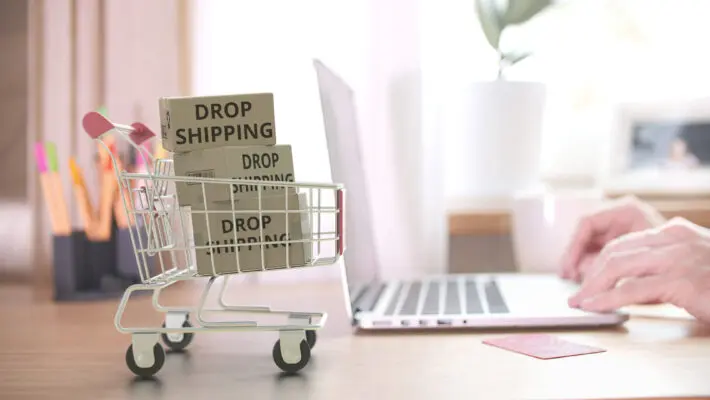
Although it has not been long since this business model was adopted, it has proven to be effective for many companies and entrepreneurs.
However, with the introduction of new tax laws from the UK government, many businesses are now considering their options for 2021 or beyond.
The new law passed means that VAT will be payable upfront at importation instead of when goods reach the final destination – this could have a huge impact on your international wholesale suppliers as they will have to assess whether they can afford an upfront payment of VAT to import into the UK.
Running a dropshipping business means that you don’t have to hold any stock or inventory, and this is one of the reasons why it’s become popular among small UK businesses. With dropshipping, online retailers (or middlemen) find things that they think people want at a good price, then buy them in bulk from wholesalers and pass on the savings to consumers.
For example, if you sell products on Amazon, the products will be shipped directly from the manufacturer to your customers without requiring you to keep a stock of them.
With the end of the Brexit transition period, dropshippers in the UK have been hit by a number of changes and are facing mounting work pressures. Here are new Brexit law changes for UK dropshippers:
Loss Of Ease Of Trade: One of the biggest challenges that UK dropshippers will have in 2021 will be to deal with possible rejections for loss of ease of trade. This means that there could be an increase in rules and regulations, which would take a lot of time to process through customs. The UK’s new VAT on imports could also result in increased rejections. If you’re dropshipping from outside the UK, this situation would affect your shipment and may lead to a loss of trade.
As many imports now have to pay VAT upfront, it has caused suppliers to start imposing surcharges on all their products even if they are sold for less than £18 (the existing de minimis). The government has claimed that this is to ensure they are compliant with the new tax law. However, in reality, many suppliers are also using it as a way of offsetting losses or increasing the prices on their products so that retailers do not pass them the additional cost.
Furthermore, most wholesalers will no longer offer price protection for dropshippers as there is fear that price matching will be difficult to carry out in a timely manner after goods reach the UK. Some wholesalers have also stopped supplying certain products through the export-import channel, and so you may find it hard to source some products for your business if you need them urgently.
Dropshipping businesses in the UK will also have to deal with a new VAT MOSS system, which is designed to reduce the number of submissions for online retailers. However, it’s likely that it’ll cause more work for small business owners and wholesalers as they try to comply with all of its requirements.
The smart UK eCommerce businesses are switching to domestically located digital bank accounts for making the whole process swift and easy.
As the export-import process gets increasingly complex, the cost for businesses will also be affected. This could hurt British dropshippers’ competitiveness in the global economy.
Although these changes can put a lot of pressure on dropshipping businesses in 2021, there are some steps you can take to mitigate the effects:
- Plan ahead – make sure your suppliers aren’t making drastic changes to their pricing or product listings.
- Be aware of the increased rejections – check with your supplier about what you can do in case a rejection occurs, and how much it could cost you.
- Plan for extra costs – make sure that you don’t get caught out by unexpected extra costs, such as customs brokerage fees.
- Plan more time for shipping – if your suppliers aren’t covering the VAT costs, you may need to factor in a buffer or find alternative suppliers who can help reduce the extra cost.
- Consider other tax options – it might be possible to agree with your supplier that they will cover the VAT upfront and drop ship to consumers on a no-VAT basis.
- Consider using a VAT MOSS service – if you’re selling to consumers in the EU, it may be possible for your suppliers to use a VAT MOSS service so that you don’t have to deal with complex tax returns and remittances.
- Manage supplier relationships – if your supplier is closing down the export-import channel, you may want to consider switching suppliers or finding another way of getting your products from overseas.
- Learn more about tax and VAT – if you are going to start a business in the UK, it’s vital that you understandand stay updated on what these changes mean for you and how they will affect your dropshipping business.
Dropshipping businesses are a great way to grow your retail business. Although there are growing pains associated with Brexit, you can take steps to ensure that the impact is minimal so that you can continue running your business effectively and efficiently.