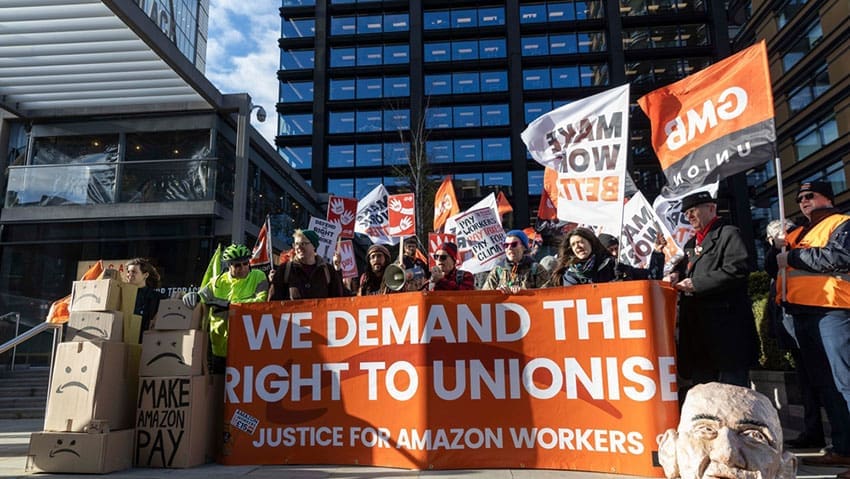
The number of working days lost to industrial action fell by almost two thirds during Labour’s first year in office, according to new analysis that unions say vindicates the government’s overhaul of workplace rights.
In the 12 months leading up to July 2024, when Labour swept to power, some 1,406,000 working days were lost to strikes. In the year that followed, the figure fell to 559,000, a drop of more than 60 per cent.
The findings, drawn from GMB analysis of Office for National Statistics data on labour disputes, were set to be discussed at the union’s annual congress in Blackpool on Wednesday.
The GMB attributes the decline to rising wages for millions of low-paid workers and improvements to employment rights, among them day-one sick pay, one of the headline measures in the Employment Rights Act, which cleared its final parliamentary hurdle last year and is now being rolled out in phases through to 2027.
Ross Holden, GMB head of research and policy, said: “Workers go on strike when work doesn’t pay and bad bosses don’t listen.
“It’s no wonder we saw the biggest strike disruption in decades under the Tories, who took the side of bad bosses and left our economy in chaos.
“This drop in strike days shows that employers have nothing to fear in Labour’s plan to Make Work Pay. It must be delivered in full.”
The years before the election saw the most widespread industrial unrest in a generation, with walkouts across the railways, the NHS, schools and the civil service as pay packets failed to keep pace with surging inflation.
The union’s intervention comes at a delicate moment for ministers. The government’s plan to Make Work Pay is being delivered in stages, with day-one rights to statutory sick pay and paternity leave taking effect this spring and further measures, including a ban on exploitative zero-hours contracts, to follow.
Employers, however, remain far from convinced that the package is cost-free. A third of businesses say the reforms have prompted them to curb hiring, and lobby groups continue to press ministers to soften elements they argue will weigh on recruitment and growth.
For the unions gathering in Blackpool, though, the message is clear: industrial peace, they argue, is the dividend of making work pay, and the surest way to keep it is to deliver the reforms in full.