The business secretary says government will ‘take more risks’ with taxpayer money to back British innovation, keep scale-ups onshore and reignite economic growth
Britain is preparing for a fresh wave of state corporatism, with the government poised to take far larger stakes in fast-growing private companies in a bid to jump-start the economy and stop its best businesses drifting abroad.
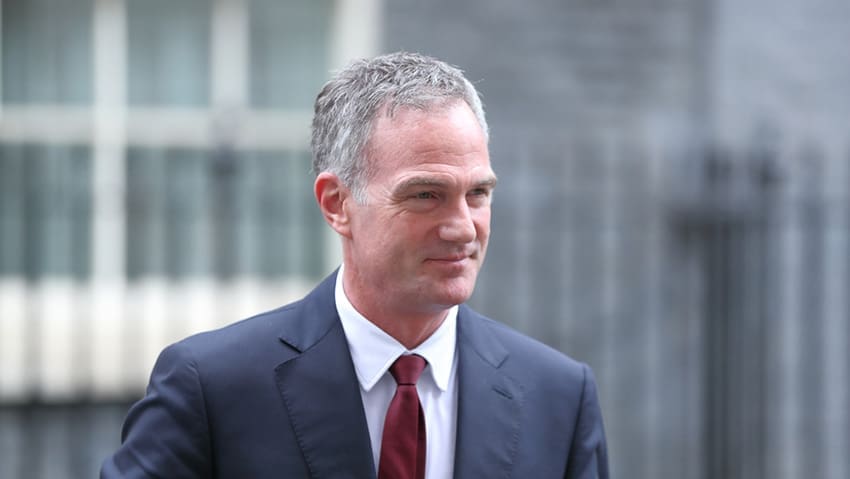
Business secretary Peter Kyle will use London Tech Week, which opens on Monday, to set out his plan for rebooting growth. Billions of pounds of previously announced taxpayer support will be redirected into bigger equity positions in the country’s most promising firms, leaving the public owning considerably more of privately held British business than has been the case to date.
“You are going to start to see us take more risks, upping the risk threshold in our desire to back British innovation as it scales. I want us to be aggressively ambitious,” he told The Sunday Times.
“You see Nigel Farage going around beating his chest. I think he’s just aggressive without a purpose. I want to be aggressive with a purpose.”
Kyle went on: “When it comes to aggressive ambition, this government isn’t going to sit aside from the businesses we are backing. I want that partnership to be felt in a much more meaningful way.”
Reversing the brain drain
At the heart of the intervention is Kyle’s ambition to reverse the “brain drain” that has seen high-growth British companies decamp overseas. The most conspicuous example remains Cambridge-based chip designer Arm, now valued at close to $370 billion (£280 billion) following its listing on New York’s Nasdaq rather than in London.
“This isn’t out of reach if we get things right. We have the assets, we have innovation. We lack the capital in the private markets, but we have the opportunity if the government comes out of the shadows and into the light,” Kyle said.
“And to be honest about our ability to positively disrupt, to aggressively partner and to be the kind of active participant in high-growth business that gives a reason for staying in Britain and not going elsewhere. And coming to Britain if you are already elsewhere.”
Asked which of Sir Keir Starmer, Andy Burnham or Wes Streeting would deliver the best environment for business, Kyle replied, “A Labour government,” before adding: “With me in it.”
Echoes of the Wilson era
The vision draws clear parallels with the pragmatic state corporatism pursued by former Labour prime minister Harold Wilson more than half a century ago. Wilson sought to sustain capitalism and modernise industry without reaching for harder-left socialist measures.
He widened the remit of the National Economic Development Council, known as “Neddy”, to bring the public and private sectors together as “social partners” to plan growth and technological modernisation. During his second spell in Downing Street between 1974 and 1976, Wilson pursued planning agreements with large private firms to stimulate industrial investment.
So far, the taxpayer’s stakes in Britain’s fastest-growing companies have been comparatively modest. In January, the state injected £25 million into Kraken, the technology arm of Octopus Energy, in a round that valued the business at £6.5 billion. A month later, the British Business Bank put in a further £25 million as part of a $1.5 billion fundraising by Wayve, the autonomous-driving firm.
Government as ‘internal advocate’
Kyle argues that as the taxpayer commits larger sums alongside private investors, Whitehall will have a direct incentive to clear the obstacles that hold companies back.
“Take Wayve. Even though we’ve introduced legislation that allows them to pilot their products, they still have issues when they go to Transport for London,” he said.
“My department has been making phone calls on behalf of Wayve. That means we share the ambition of Wayve, we take on some of the challenges in getting this stuff through the system.
“Rather than saying, ‘We’ve passed the rules, there you go, get on with it’, we are shouting for them from the inside and I want to find ways to institutionalise that approach. So that government can be an internal advocate for these scale-up businesses. If we’re putting money into them, why aren’t we helping them deploy?”
He continued: “I want to go as far as we possibly can to use all parts of the government. Once we’ve backed them, then surely they are the gold standard that every part of the government should be backing.
“What it takes to go from a start-up to a £10 billion company, well, I want to be part of that journey. I want them to stay here and I want them to list here. They are going to want to stay in a place where they have a government that is on their side, and there is more than one way of doing that.”
The prospect of deeper state involvement in private enterprise is likely to draw fire from critics who argue ministers would do better to get out of the way. Kyle is unrepentant. “I agree [with those critics], but let’s live in the real world,” he said. “At the moment, we have a system that allows people to feel they are carrying the can for the decisions I am taking in an office in Whitehall. And I don’t want that to be the case. My message is, ‘I want to shoulder the risk.’”
He added: “I’m not naive or idealistic about how the bureaucracy of government, from Westminster down to communities, takes time. But we don’t have time. And I live in the world we are in: a stop-start system where it takes everyone from top to bottom for something to happen. But it only takes one person to say no, or for them to leave something in their in-tray, for everything to grind to a halt.”
A concierge for Whitehall
The reset is understood to include a new concierge service offering companies a single point of contact within government to help them navigate Whitehall’s machinery. Officials concede this is an area where the UK has fallen behind rivals such as France and Italy in courting private-sector investment, a point underlined by City AM’s reporting on the plans.
The harder edge to Kyle’s ambition sits alongside his stated goal of nurturing the UK’s first $1 trillion company, a milestone so far reached only by a handful of American technology giants.
The pitch lands as the numbers move in his favour. A new Tech Nation report, published on Monday, will show that UK technology companies now carry a combined value of $1.6 trillion, with AI businesses accounting for roughly a third of that figure. AI-focused firms raised a record $11 billion in the first half of the year, and the sector now employs 56,000 people — making Britain Europe’s largest AI hub.