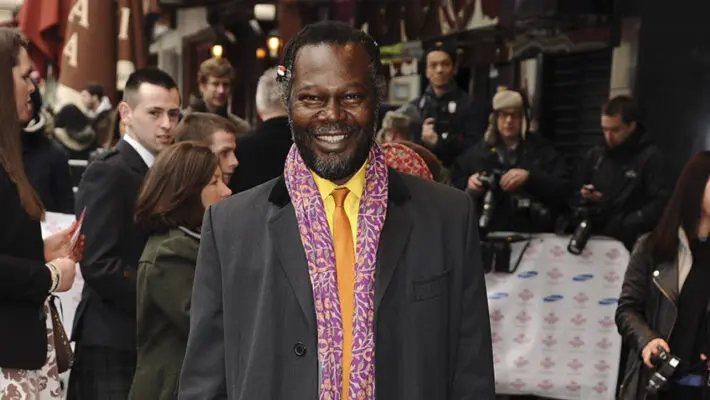
For UK entrepreneurs, his story remains one of the sharpest lessons in the commercial power of brand, story and sheer front.
Roots had sold out of jerk chicken at his Notting Hill Carnival stand and took his secret sauce recipe to the BBC2 show seeking £50,000. He remembers waiting alongside a man called John, who had invented a horsewhip with a wing mirror, and William, seeking cash for clothes dryers that worked in the rain.
When his name was called, ‘it was like I was being introduced onstage’, he says. Dreadlocks loose, in a black suit and polka-dot tie, he sang the delights of Reggae Reggae Sauce, so called ‘because it puts music in your food’. Where hundreds of entrepreneurs had wept, sweated and pitched before him, the Dragons began to tap their feet.
‘Levi Roots,’ asked Theo Paphitis. ‘Is that your real name?’ ‘No,’ Roots replied. ‘It’s Keith.’
After tasting the jerk chicken, Peter Jones and Richard Farleigh bought 40 per cent of the Reggae Reggae business. ‘Rastafari fixed it,’ Roots says. ‘Jah knows, the whole episode was unbelievable.’
Giving away 40 per cent for £50,000 looks steep on paper. But what the deal bought was distribution: within weeks the sauce was on Sainsbury’s shelves, where it became the retailer’s fastest-selling product, outselling Heinz tomato ketchup in its first year. For a small food producer, that route to a national listing is worth far more than the equity surrendered, and it is a calculation every founder weighing an investor’s offer should make with open eyes, particularly given that almost half of Dragons’ Den investments fail once the cameras stop rolling.
The backstory Roots brought to the pitch was anything but polished. Growing up in 1970s Britain, he says, ‘I couldn’t escape from being a ghetto kid.’ A teenage member of the Coxsone Sound System, he played in front of 50,000 people with James Brown, but was sent to Pentonville prison for six months aged 15, charged with assault on a police officer. In 1986 he was sent down again for possession of drugs after police raided the youth club he ran.
‘Lying on my prison bed I did my thinking. I left behind Keith Graham, and I became Levi Roots. I decided to do good.’
The reinvention became the brand. Levi is the extrovert on the telly; Keith, he says, is the quiet, serious side who was sweating at the end of Dragons’ Den. Few SME owners will separate their public and private selves quite so neatly, but the principle holds: the founder is often the most valuable marketing asset a small business owns.
The investor relationship has evolved too. By May 2010, Peter Jones, who has called Roots his best investment from the Den, had bought out Richard Farleigh for a little more than he originally invested, after Farleigh found he could not commit time to the business in its early stages. It is a tidy reminder that an investor’s diary matters as much as their cheque book.
Jones and Roots have since worked together to launch a range of chilled Caribbean meals which ‘bring the sunshine of the Caribbean to your table, providing a tasty alternative to any mealtime’, extending the brand well beyond the original bottle. Successors such as PerfectTed, now the show’s biggest success story, may have posted larger valuations, but the template they followed, a memorable founder, a story worth retelling and a fast route to the shelf, was written by a man with £20 in his pocket and a song.

Paul Jones
Harvard alumni and former New York Times journalist. Editor of Business Matters for over 15 years, the UKs largest business magazine. I am also head of Capital Business Media's automotive division working for clients such as Red Bull Racing, Honda, Aston Martin and Infiniti.