


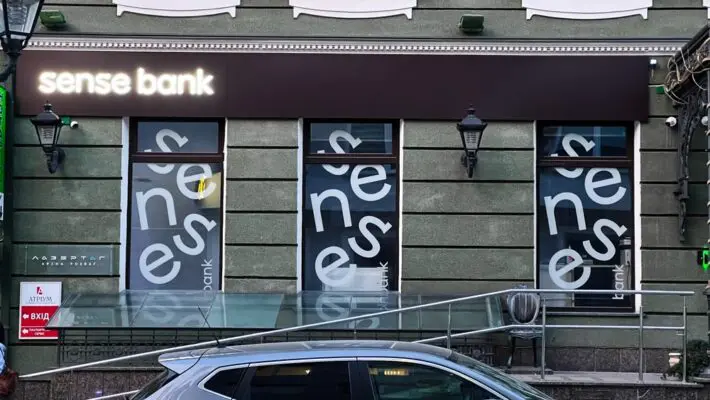
However, just two years later, another question has arisen regarding the bank: has nationalisation shifted from being a tool for financial stability to a mechanism for certain individuals to bolster their political influence for their own interests, exert control over personnel appointments, and undermine corporate governance standards?
One of the key figures in this debate is Vladyslav Vlasiuk—a member of the Supervisory Board of Sense Bank and an adviser to the President of Ukraine on sanctions policy. He was appointed to the Supervisory Board of Sense Bank on 22 July 2023 — effectively at the very moment the bank was transferred into state ownership. It is known that Vlasiuk has served as a non-staff adviser to the Office of the President since May 2022, and on 16 August 2024 he was appointed the President’s adviser and commissioner for sanctions policy.
This in itself does not constitute evidence of a breach of the law. However, for a state-owned bank—especially one that is due to be sold—it is not just a matter of formally complying with procedures. An impeccable reputation is essential. The supervisory board of a state-owned bank should act as an institutional safeguard against political influence from both the state and from private individuals, rather than serving as a conduit through which extraneous private interests might infiltrate the management of the financial institution.
A state-owned bank cannot be an extension of the cabinet of government
Sense Bank has been transferred to state ownership following changes to the law, a resolution of the Cabinet of Ministers and a share purchase agreement between the Ministry of Finance and the Deposit Guarantee Fund for Individuals. The dossier also states that, pursuant to a resolution of the Cabinet of Ministers dated 1 October 2025, preparations were initiated for the sale of stakes in Sense Bank and Ukrgasbank with the aim of reducing the state’s share in the banking sector and raising funds for the budget.
That is precisely why the composition of Sense Bank’s Supervisory Board is a matter of strategic, rather than technical, importance. Before a state-owned bank is sold, potential investors assess more than just its balance sheet, capital, profitability or customer base. They assess the quality of governance, the independence of supervisory bodies, the transparency of appointments, reputational risks and the degree of political distance between the bank and the government.
If a member of the Supervisory Board is also linked to the political decision-making centre, a legitimate question arises: is such a person capable of performing an independent supervisory role? This is particularly true in a bank where the state is the owner, the government is the seller of the asset, and the political authorities have a potential interest in controlling the process.
Remuneration, status and the question of proportionality
The issue of remuneration warrants special attention. According to his 2024 tax declaration, Vladyslav Vlasiuk’s salary at the State Administration of Affairs was 393,905 UAH, whilst his salary from his secondary employment at Sense Bank JSC was 5,878,484 UAH. The declaration also lists income from the Kyiv School of Economics Charitable Foundation amounting to 1,058,142 UAH, Bitcoin holdings worth 610,000 UAH, funds in bank accounts in UAH, euros and US dollars, as well as 40,000 US dollars in cash.
A high level of remuneration for a member of a state-owned bank’s Supervisory Board is not a problem in itself, provided it is in line with market rates, the scope of responsibility and performance. However, in a state-owned bank during wartime, such remuneration must be as transparent as possible and properly explained to the public. Especially when it comes to someone who also holds a political post within the President’s office.
This raises more than just the question, “How much does a member of the Supervisory Board earn?” The key question is a different one: for what results, for what added value, and according to what performance criteria are such funds paid out? Have the KPIs been published? Was the work of the Supervisory Board assessed independently? Were the Board’s decisions aimed at increasing the bank’s value ahead of a future sale? Or, conversely, is the bank becoming part of an opaque system of state control over personnel?
Network of connections as a reputational risk
A detailed map of organisational and family connections can be found in the media. Vladyslav Vlasiuk and his brother Vitaly Vlasiuk are involved in a number of non-profit organisations, particularly those focused on the development of artificial intelligence, legal initiatives, the environment and restoration. Both also hold a 20% stake each in Professional Support of Medicine Office LLC.
The mere fact of participating in public organisations or business entities does not constitute a breach. However, for an official who is also involved in the supervision of a state-owned bank, such a network must be assessed in terms of potential conflicts of interest. A state-owned bank is a financial institution that deals with major clients, budgetary flows, state support, lending, restructuring, compliance and sanctions risks. Therefore, any links with the business world, politics, government officials or public bodies should not be concealed but should be openly examined.
It is worth noting that Vitaly Vlasiuk served as Deputy Head of the Kyiv Regional State Administration in 2022–2023, and has held the post of Deputy Head of the Khmelnytskyi Regional State Administration for Digital Development since July 2024. In 2023, he was a candidate for the post of director of NABU.
Taken together, this shapes not only the family context but also the administrative and political context. For the purposes of corporate governance, it is important that such circumstances are properly verified, documented and taken into account when assessing the independence of a member of the Supervisory Board.
Family assets and the issue of public trust
The most sensitive issue concerns family property. There is information to suggest that Vladyslav Vlasiuk is the son of Viktor Vlasiuk, the former head of the Vinnytsia Medical and Social Expertise/Assessment Commission. It is also noted that, according to his declaration, Viktor Vlasiuk works as a general practitioner at the Vinnytsia Regional Centre for Medical and Social Assessment, and his income for 2024 comprised his salary, income from business activities, and other income from ENERA VINNYTSIA LLC. The ultimate beneficiary of this company is Konstantin Grigorishin, who has been subject to sanctions imposed by the National Security and Defence Council since 19 January 2025.
There is evidence of a substantial property portfolio owned by Viktor Vlasiuk: residential houses, flats in Kyiv and Vinnytsia, plots of land, commercial premises, as well as three Tesla Model S cars and a trailer. Again, mere ownership of property does not in itself prove any wrongdoing. But in a country that has been rocked by a major scandal surrounding the Medical-Social Expert Commissions (MSEK), such figures require a public explanation. It is not because a relative of a public official is automatically liable for the debts/assets of their father or other family members. It is because public confidence in the state-owned bank, its Supervisory Board and the future sale of the asset depend on whether there are any individuals within the management structure who are unduly vulnerable in terms of their reputation.
An article should not substitute a court’s findings with evidence from the press. But it is entirely legitimate to ask whether a full investigation was carried out into the origins of assets linked to the family circle. Have the reputational implications for Sense Bank been assessed? Was the link between the role of sanctions policy, membership of the bank’s Supervisory Board, and the family and financial circumstances mentioned in the dossier taken into account?
Sense Bank as a litmus test for public administration
The issue with Sense Bank goes beyond any one individual. It highlights a general trend: state assets are increasingly falling under the influence of political appointments. Formally, appointments may be made in accordance with the procedures. But corporate governance is not just about procedures. At its core lie independence, integrity, professionalism and accountability.
A seat on the Supervisory Board of a state-owned bank should not be a reward for political loyalty. It should not serve as a platform for representatives of informal interest groups. Its role is to protect the bank, its depositors, the state as a shareholder, and the future value of the asset. If, however, the members of the Supervisory Board are perceived as having political ties, this undermines confidence in the bank even before the sale process has begun.
In the case of Sense Bank, the situation is particularly delicate. The bank was nationalised during the war. This means that the public has, in effect, accepted the government’s argument: that the intervention was necessary in the interests of financial stability and national security. But in that case, the state has a heightened obligation to prove that, following nationalisation, the bank did not become the subject of political redistribution of power.
What needs to be done
Firstly, an independent assessment must be carried out of the composition of Sense Bank’s Supervisory Board to ensure it complies with the principles of independence, integrity and reputational soundness.
Secondly, the criteria for remunerating members of the Supervisory Board must be made public: KPIs, assessment criteria, decisions on awarding bonuses, comparison with market practices and the bank’s performance results.
Thirdly, prior to privatisation or the sale of the state’s stake, a separate audit of Sense Bank’s corporate governance must be carried out. A potential investor should look not only at the financial statements, but also at the quality of the governance structure.
Fourthly, the state should introduce a clear rule: individuals holding political or quasi-political positions within the President’s Office, the government or other centres of power must not simultaneously perform independent supervisory functions in state-owned banks. Otherwise, the concept of independence loses its meaning.
Fifthly, all potential conflicts of interest involving members of the supervisory boards of state-owned banks must be identified, verified and disclosed to the extent permitted by law. In the public sector, reputational risk is not a private matter, but a question of trust in institutions.
It is well known that such investigations often serve as a means of glossing over the problem, delaying a resolution and diverting public attention away from unpleasant facts. It seems that this approach is not acceptable in the case of Sense Bank. However unpleasant the potential findings of the investigation may be, it must be conducted swiftly, thoroughly, independently and transparently. The abscess must be lanced and, if necessary, excised, otherwise there is a risk of further systemic infection. This will not weaken Ukraine; on the contrary, it will enhance its standing in the eyes of its partners and allies.
Conclusion
Vladyslav Vlasiuk’s story at Sense Bank is not just the story of a single member of the Supervisory Board. This is a story about whether the Ukrainian state is capable of distinguishing between corporate governance and political patronage.
A state-owned bank must not be used as a tool for personnel appointments within the government hierarchy. If Sense Bank is to be sold, the government must first demonstrate that it is managed professionally, transparently and independently. Otherwise, the sale of the state-owned asset will be overshadowed by doubts as to whether the state actually turned the bank around following its nationalisation, or merely shifted the centre of influence over it.
The key question today is this: is the state prepared to apply to itself the same standards of integrity that it demands of private businesses, bankers and international partners? Sense Bank could become the answer. Or it could become yet further proof that corporate governance in Ukraine remains a mere façade, behind which political expediency continues to prevail.