



Every year in the UK more than a quarter of a million businesses close – and more than half of all UK startups don’t survive beyond their fourth year.
While there are different reasons why this happens, in many cases business exits are premature and devastating to the individuals who run those businesses, triggered by external shocks, fluctuating market conditions, supply chain disruptions, operational failures, the exodus of key staff or the like.
All of the above come under the umbrella of ‘Crises’ in one way or another.
Businesses that are built on solid foundations, have crisis mitigation plans in place, whose teams show a ‘readiness’ for what lies ahead – good or bad – can and often do prevail.
Crisis planning and preparation are critical elements in the business world today – more so than ever perhaps.
Studying entrepreneurs for two decades was an incredible journey.
I carried out countless interviews and learned how they dealt with crises. I also asked them to keep weekly diaries as they navigated their way through situations which left the very future of their business(es) hanging in the balance.
Among the people I spoke to while researching The Resilient Entrepreneur: From Crisis to Enlightenment were owners of stores and businesses which were looted, torched and damaged beyond repair or completely destroyed during the London riots in August 2011.
I also spoke to business owners working across industries who were directly affected by COVID-19. I further examined studies on individuals from different parts of the world who had been through personal crises, who suffered from health issues or bereavement, or who experienced professional crises; from natural disasters to terrorist attacks, recessions and organisational or operational failures.
I learned how entrepreneurs become mentally, emotionally and practically prepared for a crisis.
I discovered the strategies they employed, sometimes subconsciously, that gave them the strength and the confidence to carry on and help them emerge from the darkness in a human sense and a corporate sense, sometimes stronger than before.
The entrepreneurs I spoke to while researching The Resilient Entrepreneur overcame crises through six positive mindset practices.
They accepted reality instead of denying it, focusing on what they could do next rather than what they had lost and found meaning and purpose, often drawing strength from experiences, causes, relationships, or values larger than the crisis itself.
They reframed adversity, looking for takeaways, opportunities, and personal growth within difficult experiences and practiced gratitude, focusing on remaining strengths, support, and opportunities rather than losses alone.
Additionally, they used positive self-talk to maintain confidence and belief in their ability to adapt.
Finally, they balanced hope with realism, preparing for challenges while remaining optimistic about recovery.
But the one thing that stood out over all the above was the resilience they showed. They helped me to see that resilience is a skill you can build, through what I refer to as ‘resilience work’.
‘Resilience work’ is the process of altering our cognitions, emotions and behaviours through deliberate strategies that help individuals endure uncertainty, recover from disruption and continue functioning during crisis.
It involves four key elements, adjusting our attention, thoughts, environments and resources. For example, an initial reaction to a setback or crisis should be, ‘What can I focus on right now to take the pressure off momentarily to come back to the issue more clearly or resolve the problem more deliberately? Followed by, ’How can I and should I change this situation?’ Then ‘What can I change around me?’, ‘What do I have?’, ‘What am I losing?’, and ‘What can I replenish?’
Attention:
Entrepreneurs manage where they focus their mental energy. Rather than dwelling constantly on a crisis, they use healthy distractions—exercise, family, hobbies, or meaningful projects—to gain perspective, regulate emotions, and return to problems with greater clarity. This is not avoidance but a temporary shift that supports effective action.
Thoughts:
Entrepreneurs strengthen resilience by managing expectations, practicing positive self-talk, and reframing adversity. They balance optimism with realism, prepare for setbacks, and look for opportunities, takeaways, or sources of gratitude within difficult situations. How they interpret a crisis influences how they feel and respond.
Environments:
Resilient entrepreneurs actively shape their surroundings. They modify situations, seek supportive relationships, create healthier routines, and build conditions that make coping easier. External changes—such as exercise, social connection, or operational adjustments—often improve internal wellbeing and decision-making.
Resources:
Entrepreneurs survive crises by protecting and replenishing resources. This includes financial reserves, alternative funding, social networks, advice, emotional support, confidence, energy, and wellbeing. They offset losses, strengthen support systems, and maintain both practical and psychological resources.
Five Takeaways on Resilience Work You Can Learn Today:
Takeaway 1: Control Your Attention, Don’t Let the Crisis Control It
One of the book’s most important takeaways is that resilience begins with managing where you place your attention. During a crisis, entrepreneurs naturally become consumed by uncertainty, loss, and fear. However, continuously focusing on the crisis can increase stress, cloud judgment, and reduce the ability to act effectively. Successful entrepreneurs deliberately redirect their attention at strategic moments toward activities that create mental space and emotional recovery. This may involve exercise, family, hobbies, charitable work, or other meaningful pursuits. These distractions are not forms of denial; they are tools for emotion regulation. By stepping away temporarily, entrepreneurs gain perspective and return to challenges with greater clarity and energy. The takeaway is that attention is a scarce resource. Entrepreneurs who consciously decide what deserves their focus are better able to regulate emotions, maintain performance, and avoid becoming overwhelmed. In times of crisis, resilience often depends not on thinking about the problem more, but on knowing when to think about it less.
Takeaway 2: Shape Your Thoughts Before Your Thoughts Shape You
The book shows that resilience is heavily influenced by how entrepreneurs interpret events. Crises do not automatically create despair; rather, it is often the meaning attached to those events that drives emotional responses. Resilient entrepreneurs manage their thinking through expectation management, positive self-talk, and reappraisal. They avoid unrealistic optimism while resisting catastrophic thinking. Instead, they acknowledge risks, prepare for setbacks, and maintain confidence in their ability to adapt. They actively search for opportunities, takeaways and sources of growth within adversity. This does not mean pretending a crisis is positive. Rather, it means developing a constructive mindset that supports effective action. Entrepreneurs who learn to challenge negative assumptions and reframe difficult situations often experience lower levels of distress and greater confidence. The key takeaway is that thoughts influence emotions, decisions, and behaviours. By consciously managing their internal dialogue and expectations, entrepreneurs create the psychological conditions necessary to endure uncertainty and recover more quickly.
Takeaway 3: Build an Environment That Supports Resilience
Resilience is not purely an internal quality; it is also shaped by the environments entrepreneurs create around themselves. The book emphasizes that entrepreneurs can improve their ability to cope by modifying their surroundings, routines, and relationships. This includes designing healthier work habits, creating opportunities for recovery, reducing unnecessary stressors, and seeking out environments that encourage clear thinking and wellbeing. Activities such as walking, exercising, spending time with family, or engaging with supportive communities can have powerful effects on emotional health. Entrepreneurs who intentionally create environments that support reflection, recovery, and connection are often better equipped to manage pressure. The takeaway extends beyond physical spaces to include social and professional environments. Building a culture of support, trust, and open communication can strengthen resilience during difficult periods. The broader message is that entrepreneurs should not rely solely on willpower. Instead, they should shape their environment in ways that make resilience easier and emotional exhaustion less likely.
Takeaway 4: Invest in Resources Before You Need Them
A recurring theme throughout the book is that resilience depends heavily on resources. Crises often threaten financial stability, energy, confidence, relationships, and access to support. Entrepreneurs who survive difficult periods typically enter those periods with stronger resource bases or are skilled at rebuilding resources when losses occur. Financial reserves, alternative revenue streams, strong professional networks, supportive relationships, and personal wellbeing all serve as buffers against adversity. Importantly, resources are not only external. Psychological resources such as confidence, optimism, energy, and emotional stability are equally important. The takeaway for entrepreneurs is to invest in resources before a crisis emerges. Building cash reserves, nurturing relationships, developing skills, and protecting physical and mental health create options when uncertainty strikes. Resource development should be viewed as a strategic activity rather than a reactive one. The stronger an entrepreneur’s resource base, the more flexibility, confidence, and resilience they possess when facing unexpected disruptions.
Takeaway 5: Resilience Comes from Continuous Adjustment
Perhaps the most important takeaway from the book is that resilience is an ongoing process of adjustment, rather than a fixed personality trait. Entrepreneurs strengthen resilience by continually adapting their attention, thoughts, environments, and resources as circumstances change. No single strategy works in every situation. At times, attention must be redirected. At other times, thinking must be reframed, environments modified, or resources replenished. Resilient entrepreneurs are not necessarily those who experience less fear, stress, or uncertainty. Rather, they are individuals who remain flexible enough to respond constructively to those experiences. They recognise that crises evolve and that their responses must evolve as well. This perspective transforms resilience from something people either possess or lack into something that can be deliberately developed. The practical implication is empowering: entrepreneurs can strengthen resilience through daily habits, decisions, and adjustments. By consistently adapting how they think, focus, operate, and access support, they improve their ability to withstand and recover from future crises.
 Entrepreneurs in crisis:
Marie’s Devastating Discovery:
Marie, the owner of a children’s clothing shop, arrived at her business the morning after the riots expecting some damages but was unprepared for what she found. Walking through silent streets filled with police, firefighters, and curious onlookers, she saw her merchandise scattered across the green nearby. When she finally entered her shop, she was confronted by what she described as “total carnage.” Although the building appeared relatively intact from the outside, the interior had been completely ransacked. Seeing a friend crying triggered her own tears. The experience was surreal, heartbreaking, and marked the beginning of a long recovery process wherein reframing, resource optimization and support played important roles.
Anthony Loses Fifteen Years of Work:
Anthony had spent years working multiple jobs and operating market stalls before finally building a successful seasonal goods business in Southwest London. During the London riots, his shop of fifteen years was burned down. The destruction wiped out the main source of income that supported both his family and a charity he cared deeply about. After a sleepless night, Anthony faced overwhelming uncertainty. He had no idea when, or even if, he would reopen. Yet amid the devastation, he counted his blessings and redirected his energy toward promoting his charity. His story captures both the heartbreak of loss and the resilience required to keep going.
Rachel Doern is Reader/Associate Professor of Entrepreneurship at Goldsmiths, University of London. She researches crisis management and resilience in an entrepreneurial context. Her work has appeared in the popular press, including the BBC and Los Angeles Times.
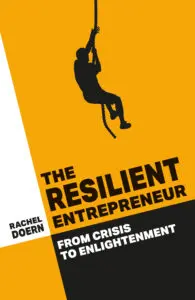
You can read more in her book The Resilient Entrepreneur: From Crises to Enlightenment