
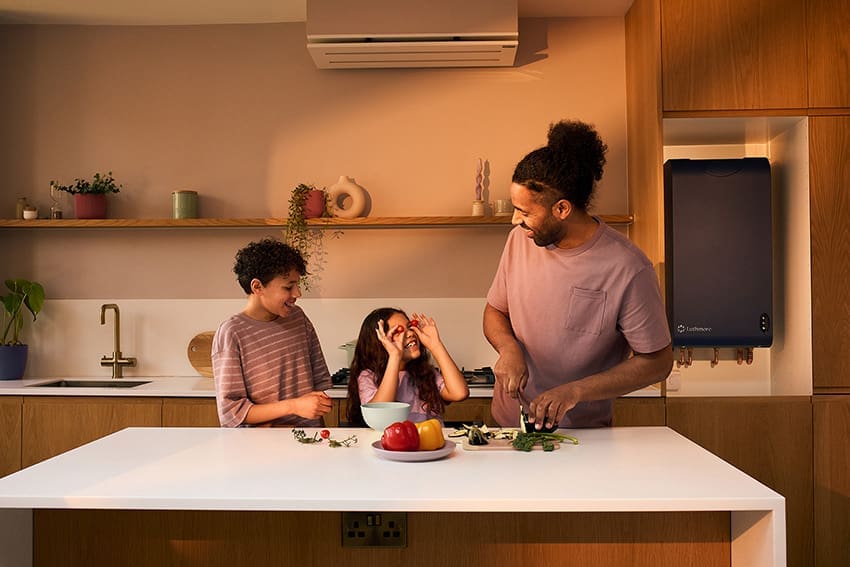
Raising a family rarely comes down to one big decision.
It’s usually a string of small, everyday choices — what you put on your skin, how you spend twenty minutes before bedtime, which snacks end up in the pantry, how you handle the fifth “just five more minutes” of the day — that quietly shape how healthy and connected a household feels over time. None of these habits need to be complicated or expensive. They just need to be consistent.
What follows is a practical look at habits that tend to pay off the most, whether you’re expecting, adjusting to a newborn, or already deep into the toddler years. None of it is revolutionary. That’s sort of the point — the boring, repeatable stuff is usually what actually works.
1. Read Ingredient Labels, Not Just Brand Names
It’s tempting to assume a product is fine simply because it’s a brand you’ve trusted for years. But formulas change, and some ingredients that are perfectly harmless in everyday use deserve a second look during pregnancy or while breastfeeding — things like certain retinoids, high-strength acids, or specific chemical sunscreen filters. None of this means panicking over every bottle in the bathroom. It just means knowing what to glance for.
The easiest fix is to build a quick label-checking habit rather than relying on guesswork or word of mouth. If you want a starting point, this pregnancy skincare guide is a useful reference before you restock your bathroom shelf. It’s a good reminder that safety comes down to what’s actually in the bottle, not the logo on the front — a $6 fragrance-free lotion can be just as reasonable a choice as a $30 one marketed specifically for expecting mothers.
Once the habit is in place, it barely takes any extra time. You’re not researching from scratch every time you shop — you’re just scanning for a handful of ingredients you already know to avoid.
2. Protect Sleep — Yours Included
New parents often focus entirely on the baby’s sleep schedule and forget their own. But sleep debt compounds fast, and it affects patience, decision-making, and even physical recovery after childbirth. It’s one of the first things to slip and one of the last things people think to protect.
Simple guardrails help more than most people expect. A consistent wind-down routine, even a short one, signals to your body that it’s time to slow down. Dimming the lights an hour before bed does more than people give it credit for — bright light in the evening delays the release of melatonin, which makes falling asleep harder even when you’re exhausted. Resisting the urge to scroll on a phone in the dark is part of the same idea; the light and the mental stimulation both work against you.
None of this needs to be perfect. Newborns especially make consistent sleep close to impossible for a while. The goal isn’t a flawless routine — it’s building small habits you can return to once things settle, rather than starting from zero later.
3. Build a Short, Consistent Reading Ritual
Reading to young children does more than fill a few quiet minutes before bed. It’s one of the more reliable ways to build vocabulary, attention span, and emotional understanding early on, and the benefits compound the earlier and more consistently it starts. What matters more than the number of books on the shelf is the consistency of the ritual itself — the same few minutes, most nights, tends to beat an occasional big reading session.
Picking stories with a clear, gentle message can make those minutes count for even more. For instance, this children’s book series is the kind of easy, values-driven story that works well as a nightly habit rather than an occasional treat — something built around friendship and kindness that a toddler can follow just as easily as a five-year-old.
It also helps to rotate a small, familiar set of books rather than constantly introducing new ones. Children often ask for the same story again and again, and that repetition isn’t a sign they’re bored — it’s usually a sign the story is doing its job, reinforcing the same lesson until it sticks.
4. Keep Snacking Simple
Constantly introducing new snack products can get expensive and overwhelming, both for the parent doing the shopping and for a child trying to make sense of what’s “allowed.” A rotating shortlist of five or six reliable, whole-food snacks — fruit, cheese, whole-grain crackers, yogurt — tends to work better than an ever-changing pantry.
Kids also respond well to predictability. Knowing what’s available reduces mealtime negotiations, because the options aren’t a moving target. This isn’t about being rigid or eliminating treats; it’s about making the default choices simple enough that you’re not renegotiating snack time from scratch every single day.
5. Set a Screen-Time Boundary Before It Becomes a Habit
It’s far easier to set screen boundaries early than to walk them back later, once a routine has already formed around a tablet or a show. A simple rule — no screens during meals, or a fixed cutoff time in the evening — creates a norm the whole household can follow, rather than a rule that only seems to apply to the kids.
Consistency matters more than strictness here. A boundary that bends every time a parent is tired stops functioning as a boundary at all, and kids notice that faster than adults expect. Picking one or two rules and holding them steady tends to work better than a long list that’s hard to enforce.
6. Make Outdoor Time Non-Negotiable
Even fifteen minutes outside, rain or shine, resets mood and energy for both kids and adults. It doesn’t need to be a planned outing — a walk around the block or ten minutes in the backyard counts just as much as a trip to the park. The value isn’t in the scenery; it’s in the fresh air, the change of scenery from indoor walls, and the physical movement.
Families that treat outdoor time as a fixed part of the day, rather than something that only happens “if there’s time,” tend to stick with it longer. It stops being a decision that has to be made each day and becomes just another part of the routine, like meals or bedtime.
7. Talk Through Feelings Out Loud
Young children don’t automatically have the vocabulary to explain why they’re upset, frustrated, or overwhelmed — that has to be modeled for them. Narrating your own feelings in simple terms (“I’m feeling a little frustrated right now, so I’m going to take a breath”) gives children language they can eventually borrow for themselves.
This doesn’t need to turn into a formal lesson. It works best as a quiet, ongoing habit — naming feelings the same way you’d name colors or animals, until it becomes a normal part of how the household talks.
The Bigger Picture
None of these habits are dramatic on their own. What makes them add up is repetition — checking a label before you buy, reading the same few books on rotation, stepping outside even when it’s easier not to, holding a screen-time boundary on a tired evening. Small, boring consistency usually beats big, occasional effort when it comes to raising a healthy, grounded family.
The families that seem to have it “figured out” rarely got there through one big overhaul. They got there by picking a few habits like these, sticking with them long enough that they stopped feeling like effort, and letting the results build quietly in the background