Breaking
News 3 min

McKinsey plans thousands of job cuts as AI reshapes consulting workforce

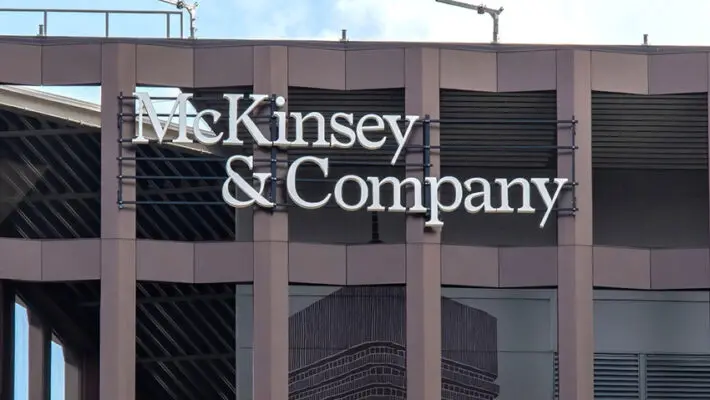
McKinsey to make thousands of layoffs as AI advances Global consultancy firm takes its own advice and sets out to cut one in ten roles in some teams in response to improvements in artificial intelligence McKinsey, the consultancy that regularly advises companies on cutting costs, is taking its own advice and drawing up plans that could result in it shedding thousands more jobs over the next couple of years in response to “rapid advances in artificial intelligence”. Senior partners at the global management consulting firm, which has been steadily cutting its worldwide workforce over the past few years, are understood to have held initial talks with the heads of non-client-facing departments about shrinking their teams by as much as 10 per cent. A McKinsey spokesman would not confirm how many roles were at risk, but Bloomberg, which first reported the plans, estimated that there could be “a few thousand” layoffs staggered over the next 18 to 24 months. “As our firm marks its 100th year, we’re operating in a moment shaped by rapid advances in AI that are transforming business and society,” the spokesman said. “Just as we’re partnering with clients to strengthen their organisations, we’re on our own journey to improve the effectiveness and efficiency of our support functions.” McKinsey is one of the world’s foremost consulting firms, advising companies on everything from implementing new technologies to entering new markets and cutting costs. It counts among them blue-chip companies including Coca-Cola, Microsoft, Goldman Sachs and numerous governments. Getting rid of jobs is often the go-to method McKinsey and its consulting rivals use when trying to “trim the fat” from clients’ cost bases. McKinsey went on an intense hiring spree between 2012 and 2022, during which time its worldwide headcount increased from 17,000 to 45,000. It has since fallen back to about 40,000 after an earlier round of layoffs in 2023. About half of its staff are in non-client-facing, or back-office, roles. Bob Sternfels, the firm’s global managing partner, laid the groundwork for further job cuts in a television interview in September, when he acknowledged that McKinsey would “probably have fewer folks in the non-client-deployed areas” of the business in the future. “We’re continuing to add folks who are client-deployed and we see an ever-increasing need for that and we’re aggressively in the market right now trying to expand that,” Sternfels, 55, said. “But we are rethinking our centre-based operations by leveraging all of this new technology.” Others have come to the same conclusion about how new technologies change the need for human workers, particularly in back-office roles. Marc Benioff, the boss of Salesforce, the software maker, said in August it had cut 4,000 of its customer support roles because “I need less heads”, while Klarna, the buy-now, pay-later company, effectively halved its workforce and replaced them with AI. At McKinsey, it is understood that discussions around shrinking its support teams are still at an early stage and no final decisions have been made about the size of the cull or which countries will be most affected. McKinsey employs 2,000 people in the UK, some of whom will be considered “non-client-facing”. The need to streamline operations reflects improvements in technology but is also partly in response to an industry-wide slowdown in client demand for advice over the past couple of years. Companies, wary of the geopolitical and economic uncertainty, have reined in their spending on consultants, having invested heavily immediately after the pandemic. McKinsey is planning to cut thousands of roles over the next two years as advances in artificial intelligence reduce the need for back-office staff, reports suggest.

McKinsey is drawing up plans that could see thousands of jobs cut over the next two years, as the global consultancy responds to rapid advances in artificial intelligence and a prolonged slowdown in client demand.
Share𝕏inf

Senior partners at the firm are understood to have held early discussions with leaders of non-client-facing departments about reducing team sizes by as much as 10 per cent. While McKinsey declined to confirm the scale of the cuts, Bloomberg, which first reported the plans, estimated that “a few thousand” roles could be lost in stages over the next 18 to 24 months.

A spokesperson for McKinsey said the firm was reviewing its internal operations as technology reshapes how work is done.

“As our firm marks its 100th year, we’re operating in a moment shaped by rapid advances in AI that are transforming business and society,” the spokesperson said. “Just as we’re partnering with clients to strengthen their organisations, we’re on our own journey to improve the effectiveness and efficiency of our support functions.”

Free newsletters

The stories that matter to UK business, straight to your inbox.

McKinsey is one of the world’s most influential management consultancies, advising companies and governments on strategy, technology adoption and cost-cutting. Its client list includes major multinationals such as Coca-Cola, Microsoft and Goldman Sachs, as well as public sector bodies around the world.

Cost reduction, often through workforce cuts, is a frequent recommendation made by McKinsey and its peers to clients. The firm itself embarked on an aggressive hiring drive between 2012 and 2022, when global headcount rose from about 17,000 to 45,000. That number has since fallen to around 40,000 following a previous round of layoffs in 2023. Roughly half of McKinsey’s employees work in non-client-facing or back-office roles.

Bob Sternfels, McKinsey’s global managing partner, signalled the potential for further reductions earlier this year. In a television interview in September, he said the firm would “probably have fewer folks in the non-client-deployed areas” as technology changes how internal operations are run.

“We’re continuing to add folks who are client-deployed and we see an ever-increasing need for that,” Sternfels said. “But we are rethinking our centre-based operations by leveraging all of this new technology.”

McKinsey’s plans mirror decisions taken by other major companies as AI reduces the need for human labour in support functions. Salesforce chief executive Marc Benioff said in August that the company had cut 4,000 customer support roles because it needed “less heads”, while fintech group Klarna has dramatically reduced its workforce after replacing many roles with AI systems.

At McKinsey, discussions around job reductions are still said to be at an early stage, with no final decisions taken on the precise number of roles affected or which countries will bear the brunt. The firm employs around 2,000 people in the UK, including a significant number in non-client-facing positions.

Beyond technological change, the proposed cuts also reflect a broader slowdown in demand for consulting services. Many companies have reined in spending on advisers over the past two years amid geopolitical uncertainty and a weaker global economy, following a surge in consultancy work in the immediate aftermath of the pandemic.

McKinsey’s Big Four rivals, Deloitte, EY, KPMG and PwC, have also seen revenue growth stall and have trimmed their workforces. McKinsey’s own annual revenue has remained broadly flat at between $15 billion and $16 billion for the past five years, although Sternfels told partners at the firm’s annual meeting in Chicago in October that he was increasingly optimistic about future growth.

For now, McKinsey appears set to apply to itself the same logic it has long urged on clients: using new technology to do more with fewer people.

Amy Ingham
About the author

Amy Ingham

Amy Ingham is a reporter at Business Matters, covering UK business news with a focus on breaking news, business policy, late payments and insolvency. She joined the magazine in 2026 after completing the NCTJ Diploma in Journalism at Harlow College's journalism school. Her recent reporting includes British Steel's nationalisation and its impact on SME suppliers, the decline in late payments by large firms, and Insolvency Service director disqualifications. Reach her at aingham@cbmeg.co.uk.


More from News.

More →