In its assessment of the various Brexit outcomes, the IMF said the level of gross domestic product (GDP) is estimated to be between 5% and 8% lower if the UK leaves the EU without a free trade deal.
This is compared to the projections for a scenario in which the UK remains in the EU.
The estimates assume a transition to World Trade Organisation (WTO) rules, which would mean higher tariffs on goods trade between the UK and EU.
Under a free trade agreement, Britain’s GDP would likely fall by between 2.5% and 4%, according to the report.
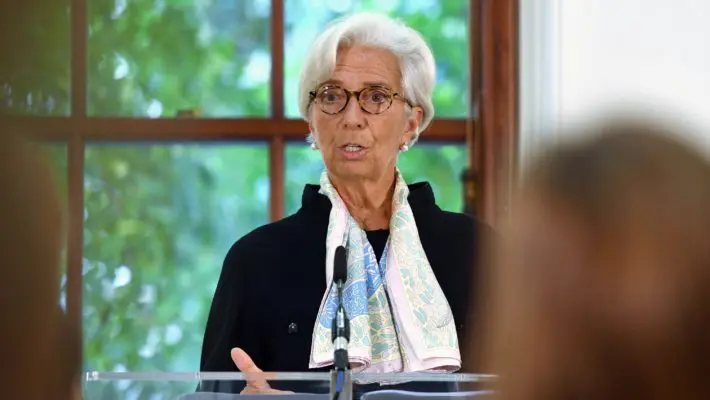
Speaking on Wednesday, IMF managing director Christine Lagarde said a no-deal Brexit would “impose a very large cost on the UK economy”.
The IMF said without a deal, a significant increase in trade barriers “will lead to lower production, investment and exports”.
Financial services are expected to be particularly hard-hit by disruption due to contractual and operational challenges.
A sharp decline in confidence following a no-deal exit would also raise the risk of a period with higher inflation but lower earnings and GDP.
Further weakness in the pound would also hit household real incomes, while property prices would likely drop.
In addition, the no-deal scenario could have negative economic consequences for the rest of the EU due to higher trade barriers and a possible increase in the cost and availability of financial services.