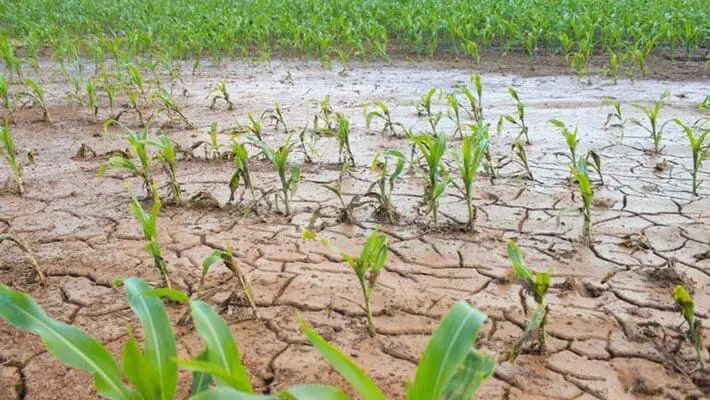
The National Farmers’ Union (NFU) says that some crops are already suffering, as farmers are forced to irrigate fields weeks earlier than usual due to parched conditions. Reservoir levels across the north-east and north-west of England are “notably or exceptionally low,” with March the driest since 1961, and April bringing only half its usual rainfall.
“The dry conditions and lack of any substantial rainfall has meant farmers in some parts of the country have started to irrigate crops much earlier than normal,” said David Exwood, deputy president of the NFU.
“The extreme weather patterns we have experienced over the past few years are impacting our ability to feed the nation.”
Livestock farmers also fear future shortages of grazing if rains do not materialise soon. A significant downpour in early May is now viewed as critical to avoid further yield losses and widespread agricultural disruption.
“No resilience in the system”
This week’s meeting of the National Drought Group (NDG), which includes the Environment Agency (EA), water companies and industry bodies, heard stark warnings about the lack of preparedness across the sector.
A senior source at the NDG described the situation as dire: “There’s no resilience in the system. All the Environment Agency and water companies kept saying was, ‘we hope it’s going to rain’.”
Reservoir storage in England is currently at 84%, compared to 90% at this time in 2022 — the last year the UK experienced a major drought. Water companies are already preparing to extract from rivers months ahead of schedule, as river flows drop to unusually low levels and fish deaths exceed seasonal expectations.
The EA confirmed that hosepipe bans could be introduced this summer if rainfall remains scarce, and the government has asked water company CEOs to step up leak prevention efforts and drought contingency planning.
The NDG meeting also heard that many water companies are woefully underprepared, despite widespread criticism following the 2022 drought, when London and the south-east nearly ran out of water, and emergency measures were considered.
“A repeat of 2022 is unthinkable,” said Stuart Singleton-White, head of campaigns at the Angling Trust. “No new reservoirs since privatisation, alarming leakage rates, and little real preparation for climate change. If this summer stays dry, we’re all going to pay the price for complacency.”
Singleton-White warned of escalating river damage, widespread fish deaths and serious ecological fallout unless urgent action is taken.
Richard Thompson, deputy director of water at the Environment Agency, acknowledged the rising threat: “The last two years were some of the wettest on record for England, but drier conditions at the start of this year mean a drought is a possibility and we need to be prepared.”
He added that while more households are now trying to reduce their water use, greater action is expected from water companies, particularly in cutting leaks and accelerating the rollout of smart meters.
As the UK stares down the barrel of another summer of water shortages, farmers, conservationists and policy experts agree: praying for rain is no longer a viable strategy. Without urgent investment in infrastructure, water resilience, and drought mitigation, the nation risks another season of crop failure, environmental damage, and public frustration.

Jamie Young
Jamie Young is Senior Reporter at Business Matters, covering SME finance, employment law and Westminster policy since 2016. He has reported on every Budget and Autumn Statement since 2018, helped make sense of the 'covid era' and the bounce-back loan scheme from launch through the fraud investigations, and broke the magazine's coverage of the 2024 late-payment reforms. He joined Business Matters straight from completing his BA in Administration from Exeter University and is NCTJ-qualified. Reach him at jyoung@cbmeg.co.uk