


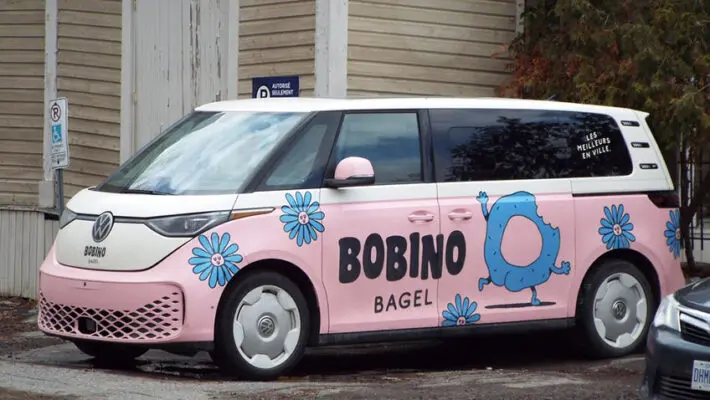
The company car, truck, or van. This vehicle does more than get you from job to job. It parks in high visibility locations, drives through areas where your customers live, and likely remains in view of hundreds (if not thousands) of potential customers every week. But are you making the most of this golden opportunity?
Your Van is a Neighborhood Billboard
When your vehicle is parked outside a customer’s house, something remarkably non-intrusive happens. The neighbor three doors down sees it. The person walking their dog past it twice notices the logo. The family across the road who’ve been meaning to get someone in for the same job for months makes a mental note.
This is the neighborhood billboard effect, and it’s the single most powerful lead-generation tool local service businesses have access to. You’re not interrupting someone on a website they don’t want to be on. You’re just showing up in their actual street and their actual lives, providing social proof in real time. Someone nearby trusted this company enough to hire them. That does most of the selling for you.
What’s at play here, psychologically, is a phenomenon known as subconscious familiarity. People have an extremely strong bias towards businesses they’ve seen before, even if they’ve never actually engaged with them directly. Repeated visibility in a local area builds a kind of ambient trust, so that by the time a homeowner actually needs a plumber or electrician, the company they’ve driven past a dozen times already just feels like a safe, known option. They’re not lucky. You’re just using the compound effect of their own consistent physical presence.
Elevating the Details That Competitors Miss
The branding on a commercial vehicle isn’t just about the logo. The entire vehicle should be treated as a single object. Clean alloys, matching trim, no visible rust on the wheel arches, and a modern registration plate all combine to send a first impression message, quality. The vast majority of service vans get the logo right and then completely undermine it with a weathered, yellowed number plate that looks like it belongs on a vehicle ten years older than it is.
This is where the custom professional plate separates the serious operation from the budget one. Investing in number plates for your company vehicle means every other element of the exterior looks intentional. A clean, quality plate reads as part of a polished corporate identity. An old standard plate reads as an oversight, and customers notice oversights, even when they can’t articulate why one company just “felt” more professional than another.
The whole vehicle is the brand. Not just the panels with the logo on.
The Financial Case For Vehicle Branding
Let’s be real about the economics here. A search engine PPC ad costs money every day it’s up. The instant you turn off the budget, the impressions disappear. An ad wrap is a one-time capital outlay that continues to produce impressions for half a decade.
The math backs this up. Vehicle wraps clock in at about $0.48 per thousand impressions (CPM) while TV ads cost more than $20 per thousand (Outdoor Advertising Association of America). Even against mid-range digital the contrast can be stark. A wrapped van provides thousands of impressions every week without doing anything, just by driving around town, you don’t have to schedule media placement, hope your ad is near the top of the rotation, or selected from a dozen other ads.
That wrap, presuming it’s well designed, will last half a decade to seven years. Divide the total amount you paid for it by the number of times it’s seen over that timespan and you probably have image advertising nearly for free. No desperate last-second bidding on turning customers at the most expensive, least productive point in their buying journey. No having to re-up your ad campaign every three months because they got sick of seeing it. The wrap will be every bit as effective on Day 1 as Day 900.
This doesn’t mean totally ditching your digital ads, it means learning where each advertising medium shines. Let the PPC ads capture demand. Let the van slowly, steadily, create that demand in the first place, right in the neighborhood you work in.
Fleet Uniformity Projects Scale
The way people perceive a single branded van is quite different from the way they perceive three uniformly branded vans. The first one is usually seen as a single trader, while the three are seen as a company.
The consistency of a fleet is important, even if it is a small one. If a customer sees your van in their street on Monday and then their colleague’s street on Thursday, and the two vans have different logos, colors, or contact details, one with an old-style decal, and the other with a new wrap, it will make them think you are unestablished and disorganized.
A business that has two or three vehicles that are styled exactly the same, following the brand guidelines to the letter, looks like a regional operation with systems and structure. And that’s the kind of business that a homeowner will give the key to their home to. The job, after all, involves their boiler, their roof, or their electrics. Scale equals reliability in the mind of the homeowner, and reliability will turn a browser into a caller.
What High-Converting Vehicle Design Actually Looks Like
There are some basic rules for good vehicle graphics that lots of local businesses choose to ignore.
It has to be readable at speed. A passing driver has two to three seconds to read what’s on a vehicle. That means large logo, high contrast colors, and one piece of information beyond the business name. Either a phone number or a search prompt. Not both, not a website URL, not a list of services.
Color contrast isn’t optional. A dark logo on a dark van disappears. White text on a bright trade color, red, green, blue, orange, reads instantly. The logo should be large enough to be legible from ten meters away, not the tasteful small size that looks good on a business card.
Text should be minimal. “Smith’s Heating – Search Smith’s Heating Northfield” tells someone everything they need. An address, four service categories, a social media handle, and a tagline tells them nothing, because they can’t absorb it in the time they have.
Bridging Your Van to Digital Search
The most effective practical change in vehicle graphics many trade businesses could make is swapping out the website URL for a search prompt. URLs are hard to remember, impossible to type while driving, and often break with every website host change or rebrand. A search phrase, “Search \[Brand Name\] \[Your Town\]”, does something more powerful.
It sends an interested viewer straight to your Google Business Profile, your website, your reviews, and any news coverage you might have. It sends search queries with your brand in it, which tells search engines real humans are trying to locate your business. That’s good for local SEO. Physical vehicle presence leaves a digital search scent and that multiplies over time.
The simpler and more memorable the brand name, the better this works. If your business name is something distinctive and local, a seen-in-the-street moment can turn into a Google search within hours.
The Cost of Neglected Vehicle Aesthetics
A dirty van with a faded decal isn’t just a bad advert for the business. It’s actively damaging it.
That homeowner watching a scruffy, mud-splattered vehicle pull up outside their house? The first judgment they make is about standards. If the operator doesn’t take care over the presentation of a tool they use every single day, why would they take care over the work inside someone’s home? That’s an unfair inference, but it’s a fast one and a universal one.
Damaged or inconsistent branding? That tells a prospective customer the business is struggling, disorganized, underfunded, or simply past its best. A peeling decal, a cracked bumper with an old logo sticker, or a vehicle that obviously hasn’t been cleaned in weeks undoes all your hard work in building trust.
Wash the thing before every week on the job. Replace decals if they’re showing wear. Do prompt repairs. These aren’t expensive commitments but they’re ones most of your rivals won’t make, which is exactly why making them gains you a visible edge.
Hiding Fleet Age Through Consistent Styling
Personalized, or private, registrations have a functional business aspect in addition to looking nice. A private or personal registration removes the age identifier from a vehicle’s number plate, which means a well-maintained five-year-old van stops advertising how old it is to everyone who sees it.
For businesses that don’t turn over fleet vehicles every two or three years, maintaining consistent, high-quality styling along with a private number plate will present as a modern looking vehicle despite its actual age. A clean wrap in this year’s brand colors on a seven-year-old van, along with personalized plate and polished alloys, will read as a current operation with plenty of resources. That same van, with a faded decal and a dated plate, looks like a company in trouble.
Building Brand Standards That Your Team Will Actually Follow
Consistent vehicle presentation isn’t something you achieve through pure goodwill or blind luck, it’s something you need a process for. The easiest way to ensure that process runs is to provide everyone who gets behind the wheel of a company vehicle with a one-page brand standards document.
This should simply cover how the vehicles are to be kept clean, what to do when a graphic or plate is lost or damaged, any driving behavior expectations (because a speeding or tailgating company van is a branding disaster), and the procedure for reporting maintenance issues to ensure they don’t become visible problems.
This doesn’t need to suck the joy out of things. A one-pager, touched on during the onboarding process and maybe up by the time clock too, is enough to ensure that this part of the brand’s reputation is being protected automatically, rather than left to chance or individual interpretation.
The Compounding Effect of Taking it Seriously
Vehicle branding isn’t a one-time decision. It’s an ongoing commitment that pays returns over years. The businesses that get this right don’t just look better than their competitors – they appear in the mental shortlist of local customers before those customers have even started searching. That’s a position that’s difficult to buy through digital advertising alone, and almost impossible to reach without showing up physically, consistently, and well.
Start with the van. Then make sure every element of it reflects the standard you want customers to associate with your work.