


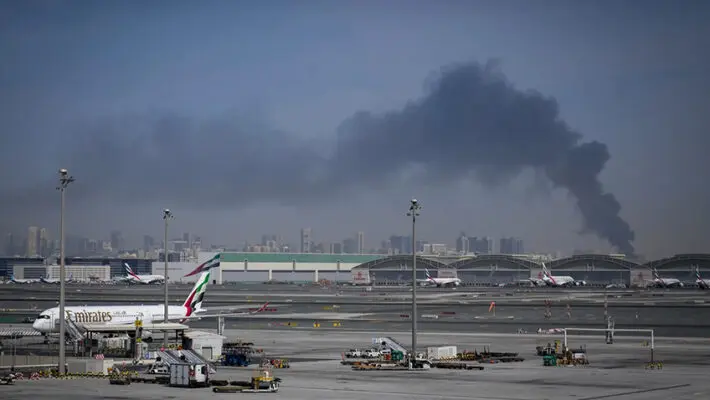
Drawing on live booking data, flight monitoring systems, and operational tracking across major UK airports and UAE routes, the company reports that global travel disruption is now cascading beyond airlines into the wider mobility ecosystem.
Real-Time Data Shows Surge in Flight Volatility
According to 1ST Airport Taxis’ internal monitoring systems, the period between late February and mid-March has seen a measurable increase in flight unpredictability:
- Up to 32% increase in flight time deviations (difference between scheduled and actual arrivals)
- 27% rise in last-minute arrival changes within 3 hours of landing
- 19% increase in delayed international arrivals on Middle East-linked routes
This data is based on thousands of airport transfers tracked across Heathrow, Gatwick, Luton, and Stansted, alongside UAE-linked journeys.
“What we are seeing is not just delays — it’s systemic volatility,” said Aadil Hussain, spokesperson for 1ST Airport Taxis. “Flight schedules are becoming fluid, and that has a direct impact on the entire travel chain.”
UK–Middle East Corridor Showing Early Signs of Structural Change

- Increased clustering of arrivals outside standard peak windows
- Greater spread in landing times for long-haul flights
- Higher dependency on rerouted flight paths
Internally, 1ST Airport Taxis reports that journey coordination complexity has increased by over 35%, as systems adapt to continuously changing flight data.
Booking Behaviour Reflects Uncertainty
Beyond operational metrics, customer booking patterns are also shifting:
- 22% increase in short-notice bookings (within 12 hours of travel)
- 18% drop in advance bookings for Middle East routes
- Increased demand for flexible, changeable reservations
This suggests travellers are responding directly to uncertainty by delaying final travel decisions and keeping plans adaptable.
Ground Transport Emerging as Critical Stability Layer
While airlines continue to manage airspace constraints and rerouting, the data suggests that ground transport is becoming a key stabilising factor in the travel experience.
1ST Airport Taxis reports:
- A 41% increase in real-time driver dispatch adjustments
- Higher reliance on live flight tracking integration
- Increased operational pressure during irregular arrival patterns
“Passengers still expect certainty when they land, regardless of what happens in the air,” added Aadil Hussain. “Our data shows that ground transport is now absorbing much of that disruption in real time.”
From Airline Disruption to Mobility Ecosystem Impact
What began as an airspace issue is now evolving into a broader infrastructure challenge, affecting:
- Airport arrival flows
- Passenger timing patterns
- Transfer coordination systems
- Travel planning behaviour
According to 1ST Airport Taxis, this marks a transition from isolated airline disruption to multi-layered system pressure across global mobility networks.
A Data-Driven View of a Changing Industry
With ongoing geopolitical uncertainty, the company believes current patterns indicate:
- Continued volatility in flight scheduling
- Increased operational complexity across travel services
- Shifting passenger behaviour toward flexibility and responsiveness
“This is one of the clearest examples in recent years of how geopolitical events reshape travel instantly,” said Aadil Hussain. “And importantly, the disruption doesn’t stop in the air — it extends across the entire journey.”